The First Scene You See Won't Be the First Scene They Wrote

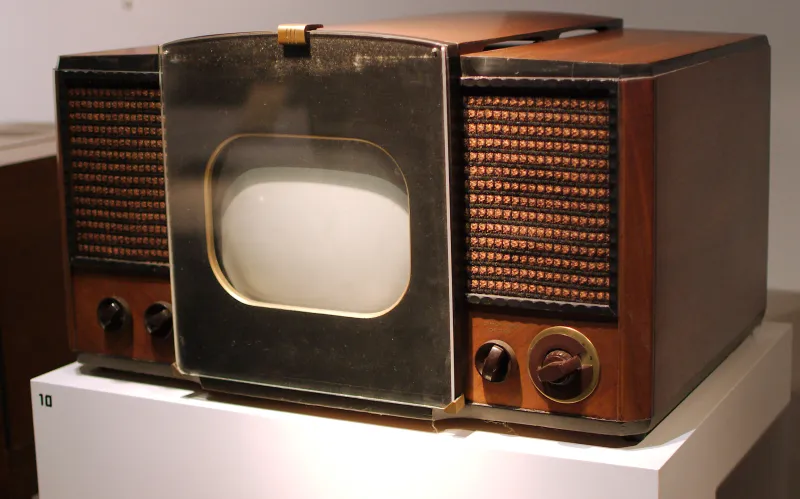
Photo by Photo by Patrik Larsson on Unsplash on Unsplash
For years, the pilot did two jobs at once: it sold the show to a network and introduced the show to you. In 2026, those jobs have split. The network gets a pitch deck, a sizzle reel, and a spreadsheet. You get a 19-second clip on TikTok where a character you have never met says something unhinged while a captioned reaction reads, 'me when the group chat starts.'
That clip is now the front door. Not the pilot. Not the poster. Not the carefully written first act that establishes the world, the tone, and the stakes. The clip is what makes someone ask, 'What is this from?' And for a growing number of shows, that question is the entire discovery strategy.
The Front Door Moved, Nobody Told the Writers
Streaming platforms have spent a decade chasing frictionless discovery. What they built, accidentally or not, is a system where the most efficient advertisement for a show is a scene stripped of context. A fight. A monologue. A reaction shot. A line delivery that works as a standalone joke even if the surrounding plot is a slow burn about generational debt.
The old pilot was a contract. It promised that if you invested an hour, the show would reward you with a story. The clip is a vibe check. It promises that if you invest 19 seconds, you will feel something immediately. Those are not the same promise, and they do not attract the same audience.
Showrunners are not oblivious. They know that a scene can travel before a character has a name. They know that a supporting actor's two-minute breakdown can outperform a season's worth of marketing. So they write with one eye on the script and one eye on the edit. Not every scene, but enough scenes. A sharp entrance. A quotable insult. A visual gag that survives a vertical crop. The pilot is still being written. It is just no longer the first thing anyone sees.
Clipability Is a Narrative Choice
There is a cynical way to read this, and a practical way. The cynical read is that television is being optimized for the algorithm, that every episode is now a container for future TikTok moments, and that narrative coherence is the price of admission. The practical read is that television has always been modular. Sitcoms have been building clip-friendly scenes since syndication. Procedurals have been opening with hooks for decades. The difference is speed and scale. The clip used to be a byproduct. Now it is a design constraint.
That constraint shows up in small ways. Dialogue gets a little punchier. Reaction shots linger a half-beat longer. Scenes are blocked so that the emotional beat lands in a tight frame, not just in the wide shot. None of this is inherently bad. A show that can be understood in fragments is not automatically a show without depth. But a show that is built for fragments can start to feel like a collection of fragments, even when you watch it start to finish.
The real tension is setup. Setup is the least clipable thing in television. It is two people talking in a room about something that will matter later. It is a location establishing shot. It is a character learning a rule they will break in episode four. Setup is where coherence lives, and setup is exactly what gets skipped when the clip becomes episode one.
The Renewal Math Gets Weird
Renewal decisions have never been purely artistic. They have always involved ratings, cost, and whatever the executives had for lunch. But the metrics are shifting. A show can underperform in completed viewing and still generate a massive clip footprint. That footprint does not always convert to subscribers, but it does convert to awareness, and awareness is the currency of a business that needs to justify every season.
So the question becomes: do you renew the show that people watch, or the show that people clip? Ideally, both. In practice, the clip can become the loudest data point in the room. A scene goes viral, the marketing team gets a win, the algorithm gets a signal, and suddenly the renewal conversation is less about narrative trajectory and more about whether the show can produce another moment that travels. That is not a conspiracy. It is an incentive.
The risk is a feedback loop. Writers learn what gets clipped. Editors learn what gets clipped. Marketing learns what gets clipped. Eventually, the show starts to anticipate its own highlights. You can feel it when a scene pauses just long enough for a reaction, or when a character delivers a line that sounds suspiciously like a caption. It is television that knows it is being watched in pieces.
What Gets Lost in the Edit
None of this means the pilot is worthless. It means the pilot is no longer the first impression. That is a different problem. A great pilot can still hook a viewer who arrives through the traditional route, but the traditional route is now one lane on a highway with six exits. The clip is the exit ramp. The pilot is the scenic route.
The shows that will survive this shift are the ones that can do both: build a world that rewards the long watch and stage moments that survive the short one. That is harder than it sounds. It requires writers to think like writers and marketers to think like editors, without letting either one fully take over. It requires a little faith that some viewers will still want the setup, even if they arrived for the punchline.
The pilot is not dead. It is just no longer first. And the clip, for better and worse, is now the scene that decides whether anyone ever gets to the scene you actually wrote.