Television for the Thumb: The Rise of the Ambient Hit
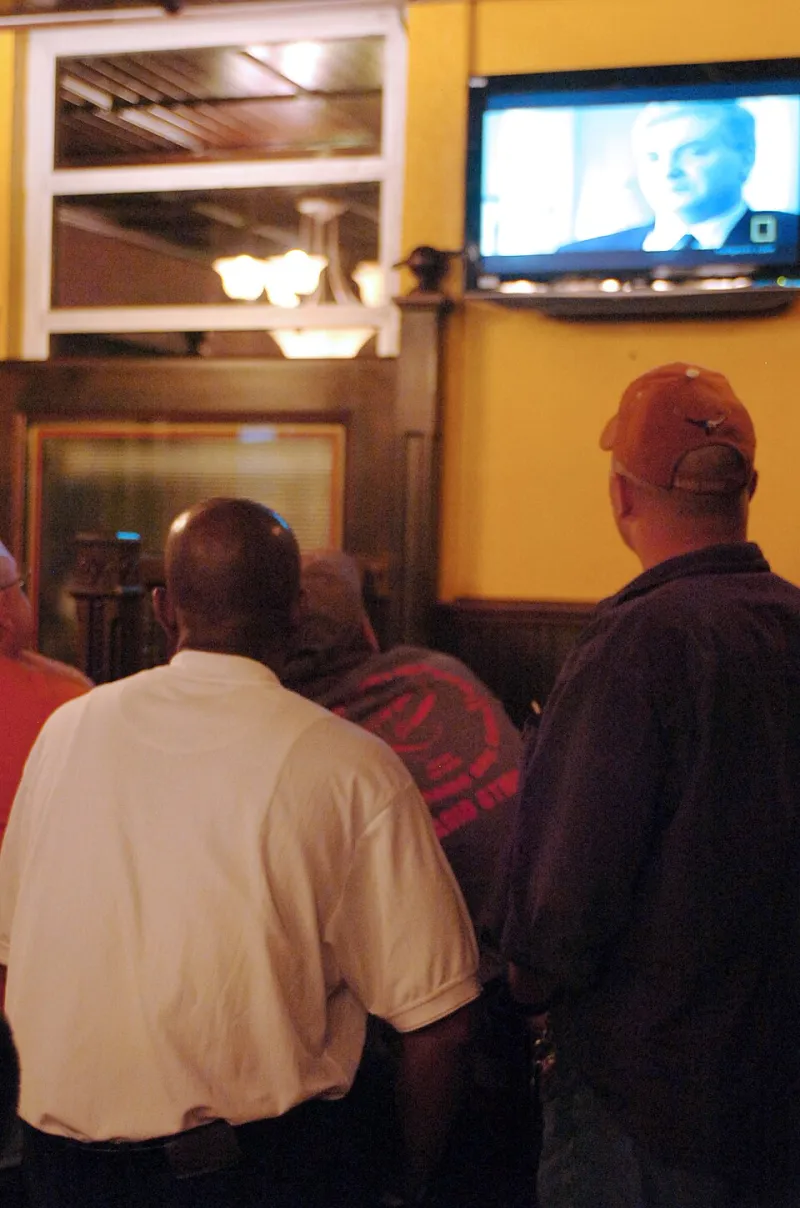
Photo: Unknown authorUnknown author, Public domain, via Wikimedia Commons
There is a kind of show you can watch with your face half-lit by a phone. Not background noise exactly—more like television designed to be sampled. You look up for eight seconds, get the emotional beat, look back down, and the episode keeps going without you. In 2026, that is not an accident. It is a target.
Streamers have spent the past few years chasing what might be called the ambient hit: a show that performs well enough to justify itself while asking almost nothing of the viewer’s full gaze. The result is a quieter shift in craft than the usual “phones are ruining TV” complaint. It is not just that audiences are distracted. It is that more television is being written, shot, and cut as if distraction is the default setting.
The Ambient Hit Is a Business Model
A streaming service does not sell endings. It sells retention, sampling, and the hope that a show will generate enough clip-sized moments to travel beyond the app. An ambient hit is useful because it can be followed while folding laundry, answering texts, or half-watching from the kitchen. It is forgiving. It does not punish a glance away.
That makes it easy to market and easy to finish. A show that demands full attention is a harder sell: it asks viewers to close the laptop, silence the phone, and trust that the payoff will be worth the focus. In a crowded market, that is a risk. But it is also why the full-attention show is starting to feel like a luxury product—not because it costs more, but because it costs time and stillness.
Writing for the Glance
You can hear the second-screen script in the dialogue. Characters name their emotions. They restate the stakes. They repeat the plan one more time before the plan goes wrong. This is not always bad writing. Sometimes it is just writing for a viewer who will look up in the middle of a scene and need a handrail.
Editors are making the same calculation. Clean reaction shots. Declarative lines. Visual motifs repeated often enough to register in a glance. Needle drops that tell you how to feel before the scene has earned it. Cliffhanger cuts that function like ad breaks for TikTok and YouTube Shorts, even when no ad is coming.
The second-screen economy does not require every show to be dumb. It requires every show to be legible at speed. That is a different craft problem. A dense mystery can still be smart, but it has to explain the clue before the viewer can miss it. A drama can still be emotional, but it has to say the feeling out loud. The audience that looks up never feels lost. The audience that looks down never feels challenged.
The Clip Is the New Pilot
A scene that works as a forty-second vertical clip is a marketing asset. Writers know this. Directors know this. A monologue can be written to be screenshotted. A fight can be staged to loop. A confrontation can be framed so the reaction shot lands even with the sound off and subtitles on.
None of this is inherently cynical. Great television has always been quotable. But when clipability becomes a primary goal instead of a byproduct, scenes start to feel like proof of concept. The episode becomes scaffolding for the promo. The season becomes a series of moments waiting to be extracted.
That is the trade-off of the ambient hit: it travels well, but it can leave the show itself feeling like the trailer for its own clips.
Attention as Luxury
The shows that demand full attention—slow-burn dramas, dense comedies, anything that trusts silence—are becoming a status object. They are what TV obsessives trade like recommendations. They are what people mean when they say a show is “worth it.” But luxury implies cost. If only some viewers can pay in attention, the rest get television optimized for divided attention.
The gap is not just taste. It is time. A nurse on a late shift, a parent folding laundry, a student with three tabs open—these are not moral failures. They are the audience the second-screen economy is built for. The problem is when every genre bends toward ambient logic. Mysteries that explain the clue before you can spot it. Dramas that recap emotional history in dialogue. Finales that spell out the theme in case you looked away during the scene that earned it.
The Full-Attention Counterprogramming
There is a countertrend, and it is being marketed as an event. Limited series with dense timelines. Comedies that talk over each other. Directors who compose for widescreen and no phone. The pitch is simple: put it down. That is a risky pitch in 2026, but it is also a differentiator. In a market full of ambient hits, demanding attention is a flex.
The second-screen script is not a moral failure. It is an adaptation. But adaptation has a cost. Television can be written for the thumb or for the eye, and the industry is currently trying to figure out whether it can afford both. The real luxury may not be a premium tier or an ad-free plan. It may be a show that assumes you are actually there.